Plinko Real Money
Compare six casino versions of Plinko, see how each ball affects a cash balance and check the terms behind withdrawals and no-deposit bonuses. Try the free board to see how a drop works.
Ready to drop
Compare Plinko games for real money
See which versions offer adjustable rows, risk settings or round verification. Open a review for the exact title, provider and source market.
| Order | Brand | Advantages | Game features | Links |
|---|---|---|---|---|
| 01 |  |
Several Plinko editions to compare | Fast Games listing. Row and risk controls vary by edition. | |
| 02 |  |
Side-by-side multiplier tables by risk level | 1xGames version with 8–16 rows and three risk levels in the published regional rules. | |
| 03 |  |
Row count and risk can be adjusted separately | RolsGames board with 8–16 rows, three risk levels and an autoplay option. | |
| 04 |  |
Published method for verifying completed rounds | Stake Originals board with 8–16 rows and four risk levels. | |
| 05 |  |
Choose how many balls to drop in a round | Gaming Corps edition with 8–16 rows and adjustable volatility. | |
| 06 |  |
A dedicated verifier for past Plinko rounds | Rainbet Original with 8–16 rows and low, medium and high risk settings. |
Listings are shown in editorial order. Check the provider name and the game’s active paytable when comparing two boards.
How to play Plinko for real money
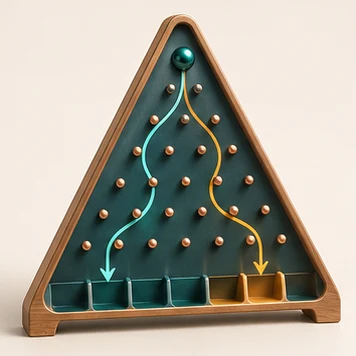
In a real money Plinko game, a ball drops through rows of pegs and lands in a bin. Each bin carries a multiplier. The game deducts a stake for the drop and credits any return from the landing bin. In a Plinko money game, the two entries to look for in the history are the amount charged and the amount returned.
Check the total stake
If you open a listing labelled “Plinko Game Online Real Money”, use the game screen to check the currency and the amount at stake before a drop. In some games the value beside the button covers one ball. In others it covers a batch or includes an optional feature. Read the total for the action before comparing it with a result.
Match the game and rules
Start a comparison with the game title, provider, row count and risk setting. A listing tagged “Plinko Game Real Money” can use the same thumbnail as a free version, and a clip may skip the stake entirely. Look at the balance label and paytable in the version you are researching. How to Play explains how peg positions and risk settings change what you see on the board.
What a Plinko ball pays on a cash stake
A listing labelled “Plinko Ball Real Money” may lead with an impressive multiplier. Start with the cost of that drop. Multiply the stake by the landing value to get the gross return and subtract the original stake to see the change in your cash balance.
| Round | Multiplier | Gross credit | Balance |
|---|---|---|---|
| First | 0.4× | NZ$0.80 | NZ$38.80 |
| Second | 2.5× | NZ$5.00 | NZ$41.80 |
| Third | 0.5× | NZ$1.00 | NZ$40.80 |
A Plinko cash game can credit a positive amount while still leaving your balance lower. At 0.2× on a NZ$2 stake, the game returns NZ$0.40 and the net change is −NZ$1.60. At 2×, the same stake returns NZ$4 and the net change is +NZ$2. The table follows three separate drops to show how that plays out across a session.
You can check this using a short account record. The fields you need are the starting balance, the total staked, the amount credited and the ending balance. If all entries belong to the same currency and account balance, the arithmetic should agree. A deposit, adjustment or transfer between different balances can explain an extra movement that has no corresponding ball in the game history.
Keep the game and payment events on separate lines so they remain easy to reconcile. A withdrawal appears as a decrease in the available balance when it is set aside or sent, depending on the platform. That movement belongs to the payment record. A game result can be checked independently by matching its stake, time and round reference.
Compare rows, risk and the full paytable
On a standard symmetric board, more routes lead to the centre bins than to the edges. The outer multiplier can be much larger, but it only tells you the return for that particular result. To compare two risk levels, hold the row count steady and read the values across the table, including the centre.
Return to player, or RTP, describes a long-run mathematical return for a particular version and configuration. The number does not say how often one person will finish a session ahead. Ask which mode the figure refers to, especially if an operator shows a maximum RTP or the game has separate paid features.
A single stake and the amount risked across a session are different figures. Ten imaginary NZ$1.50 rounds produce NZ$15 of turnover even when the opening cash balance was lower and earlier returns helped fund later drops. A fast board can reach that total more quickly than a board that waits for you to read each result. Check how many rounds you intend to make and how much time you’ve set aside before the animation begins.
If an interface offers several balls, scheduled repeats or autoplay, the rules need to say how the amount field works. It might show the cost of one ball or the total cost for the action. A panel that shows NZ$1 per ball beside a selection of five balls implies NZ$5 in hypothetical combined stakes, though how those bets are recorded depends on the game. Read the confirmation and history labels whenever they are available.
The amount staked over several rounds matters because each drop adds a fresh chance of losing some or all of its stake. Earlier losses do not change the probability of a later independent drop. Losing runs can feel as if they have a pattern when several centre outcomes look almost identical. If you hit your planned stopping point, keeping a record of the remaining balance is more informative than adding another round to even up the history.
Find the Plinko version shown in a listing
A search for Plinko may start with a clip, a coloured game tile or a name mentioned by a friend. If you want to find that particular board again, write down three things from the original page while it is open. Look for the full title, the company credited in the help screen and one recognisable feature, such as the number of rows or an extra control. Those three details make it much easier to find the same game than relying on a logo or a screenshot of a large payout.
The casino hosting a game and the company making it can be different. The host generally runs the lobby and account. The game provider supplies the title, its interface and its rules. A casino-branded board may carry the host’s name while identifying a separate developer in its information panel. A casino original may instead appear under the host’s own game label. If the developer is missing from a public listing, leave that detail blank until you can find a source for it.
For example, imagine seeing a dark board labelled Plinko with a button offering an extra feature. A plain practice board will help you understand the falling ball, but its simple shape is only one clue. Open the game’s information and compare the exact feature name. If the screen credits BGaming and calls the title Plinko 2, read that game’s guide. If the clip instead shows a chicken-and-egg theme, start with the Chicken Plinko guide and check the publisher before matching it to the clip.
How Plinko withdrawals work
If a result for “plinko casino game real money withdrawal” shows a screenshot of a win, look for a second record in the cashier. It shows how much of the credited balance is eligible for withdrawal. Before requesting a payout, compare the minimum, fees, payout currency and any identity check or original-payment-method rule.
| Stage | What to check |
|---|---|
| Game settlement | Round reference, original stake and gross credit. |
| Cashier review | Withdrawable balance, minimum, accepted method and any account checks. |
| Payment released | Quoted fee, net amount, currency and transfer reference. |
| Payment received | Match the bank or wallet entry to the transfer reference and amount. |
Say the cashier shows NZ$65 in eligible cash. With a NZ$50 withdrawal minimum and a NZ$2 fee taken from a NZ$60 request, the receiving amount would be NZ$58. The account preview should show whether the fee reduces the transfer or is debited separately. Use the quoted amount and its currency when comparing it with a bank or wallet entry.
When the cashout status says sent, save the transfer reference. A bank or payment provider can use it to identify the payment. For an on-chain payout, use the crypto guide to match the coin and network and see how confirmations affect crediting.
What to check in a Plinko no-deposit bonus
A search for “plinko casino game real money no deposit bonus” may lead to an offer for promotional credits. Find the written eligibility rules and confirm they name the game you want. A named Plinko title may count at a reduced percentage, and a separate mode or extra feature can have its own restriction.
Eligible stakes and wagering
For a NZ$10 bonus with 20× wagering on the bonus amount, the required contribution is NZ$200. If the game counts at 25%, NZ$800 in eligible stakes would account for that NZ$200. A game with zero contribution makes no progress. Check the calculation base as well as the contribution rate in the written terms.
Withdrawal caps and balances
Consider a hypothetical NZ$12 credit carrying a NZ$30 withdrawal cap after the applicable terms are met. If the promotional ledger ends at NZ$44, a cap like that limits what the promotion can release to NZ$30. An unrestricted cash balance belongs to a separate calculation. Check the scope of the written cap before assuming it covers the whole account or only the winnings generated under the offer.
Look for a restriction on game mode as well as title. A promotion might refer to an eligible supplier’s base game while excluding optional stake features. Other terms describe eligibility per named product. The wagering counter, when provided, can show how the platform recorded a completed round. Keep the associated terms and the counter together if you have a question about how the total was applied.
Before accepting a cashout that removes the promotion, read how that choice affects the balance and any pending rounds. The confirmation page may identify which amount will be released and which amount will expire.
Check the operator and the NZ account terms
A casino’s game page can identify the provider, title and rules. Look beyond that listing for the operator’s account terms. A source written for another market can help you recognise the game, while the available currency and payment options depend on the account you open.
For the current position in New Zealand, start with the Department of Internal Affairs player information. A display in NZ dollars tells you the currency used on that screen. Read the game rules for the stake currency and the cashier for the currency and method of the actual withdrawal.
If a page or app asks you to log in on a different domain, look up the operator’s known address and check the developer independently. The Plinko app guide covers mobile access and publisher checks, and the reviews guide explains how to assess cashout claims and lookalike listings.
Try the free board before comparing a cash game
The simulator at the top of this page shows where the ball lands and highlights the matching multiplier. The controls use practice values. Open the full free demo to change rows and risk and compare the values at the centre and the edge.
Pick one control to change at a time. That lets you see which printed values change when you switch modes. Which bin the next ball lands in is still uncertain. When you move to a published rules page, match the title and settings before using any numbers in a comparison.
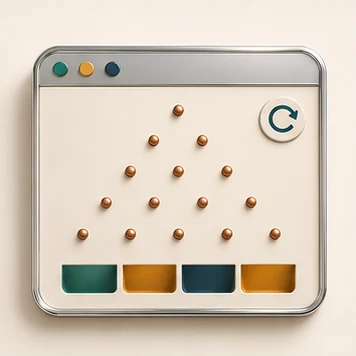
If you want to understand where the advertised number came from, note the exact stake and multiplier beside the result. A screen showing a large multiplier can omit the amount needed to calculate an actual return.
Keep a record of a pending or missing payment
A usable payment record includes date and time, requested amount, method, the platform’s reference and the status it shows. Keep the screen that describes the fee or conversion so you can compare it with the receiving record. If a game also appears unsettled, capture its round reference separately. This makes it easier to explain which action you are asking about when a message reaches support.
For a delayed transfer, state the last status you could confirm. A request that is still under account review needs a different question from one with a bank payment reference. If a check is required, open the operator’s verified account process directly and confirm what it needs. Share only the records relevant to the request, through the expected channel.
An overseas currency display may also explain a difference. Record the currency and the time used by each service if you compare values across a site and a bank account. A change in conversion or an intermediary fee can produce a lower received figure without altering the number of units originally sent.
More Plinko guides
Plinko App
Check publishers, Android downloads and account logins.
How to Play
Follow a drop through the pegs and compare rows and risk.
Is Plinko Legit?
Check a provider, an advert or a lookalike app.
Chicken Plinko
Identify the Onlyplay egg-drop game and its demo.
Plinko 2
See what changes in the BGaming version.
Crypto Plinko
Understand coin balances and round verification.
Common questions
What does it mean to play Plinko for real money?
A round debits a stake from your account and credits any return according to the landing multiplier. Money available for withdrawal is shown separately in the cashier.
Can a Plinko cash game guarantee a withdrawal?
A game return can be credited to cash, bonus credit or restricted winnings. The cashier shows the eligible amount, available methods, limits and any account checks. The payment is complete when the destination receives it.
Does every Plinko title count towards a no-deposit bonus?
A promotion can exclude a particular Plinko game or mode. For an eligible game, check the wagering rate, expiry, maximum stake and withdrawal cap in the offer terms.
Does a high-risk board have a higher expected return?
High risk typically spreads outcomes further apart. To compare expected returns, use the published RTP or the probabilities for the exact version and settings.
Can I play Plinko online for free?
Yes. The board on this page starts without signing in. The full free demo also lets you change rows and risk. It plays with sample multipliers that have no cash value.
Is Plinko NZ legit?
A Plinko board is a real game format. Check the operator, exact provider and app publisher when assessing a specific product. The Department of Internal Affairs publishes information on the New Zealand licensing transition.
Is a Plinko slot the same as standard Plinko?
Some catalogues list Plinko under slots. The usual peg-drop board uses landing bins, while a conventional slot uses reels and symbol combinations. The exact provider rules give the mechanics.

New Zealand SEO and copywriting consultant.